Sudan’s Technical Director

©IMAGO
While many are trying to realize their dream of being a coach at the professional level in Germany, Ahcene Ait Abdelmalek is living it abroad. The 49-year-old German-Algerian belongs to the group of football globetrotters. In an interview with Transfermarkt he talks about his positions in Mali, Burundi and South Sudan and also explains his current work as technical director at the Sudanese association.
Right from the start, Ahcene Ait Abdelmalek wants to make it clear what importance sport has in his life. “For me, football is like a great, never-ending love. For me, football represents cosmopolitanism. No matter what city, no matter what country you go to, if you have a ball under your arm, you will always find people with whom you come into contact through football. This allows you to get to know new cultures, mentalities and languages,” emphasizes the coach, who lives in Offenbach, who realized early on that a professional career as a player was not enough. But since he still wanted to work in football, he set the course and studied sports science in France.
Kühn, Rebbe & Co. All Transfermarkt Interviews This way! His life was then lastingly influenced by the decision to start as a youth coach for the 14-time Algerian national champion JS Kabylie. “Jeunesse gave me the opportunity when I was in my early 20s to take my first steps into coaching and gain experience. What has set me apart since then is my curiosity and my desire for knowledge. I’m interested in everything related to football. Whether it’s new forms or methods of training, for me my destination is also my starting point. Anyone who is not open to new things as a trainer should stop working as a trainer.”
In 2010, he received another attractive opportunity through his network and signed with Malian record champions Djoliba AC. During this time he took part in the CAF Champions League with his team – he is still impressed by his experiences back then. “I associate Mali with absolutely kind-hearted people. During my time at Djoliba I experienced incredible things. For example, we had to cancel training sessions because thousands of fans suddenly stormed the training ground to wish us good luck for the next game. I have seen people invest their last money to accompany us to away trips in the CAF Champions League to Senegal or Sierra Leone. The derbies against Stade Malien were also unique. Normally the traffic in Bamako is congested and there are traffic jams everywhere, but during the derbies there is nothing going on on the streets. Everyone is at the stadium or in cafes.”
Ait Abdelmalek also remembered another story that remains close to his heart to this day. “Before an important game, a very old lady came up to me. You could tell that this woman had nothing, but she still gave me an orange and said: ‘For you, coach. As a thank you for what you do for our club.’ I started crying at that moment because this gesture touched me so much.”
Ait Abdelmalek becomes Burundi national coach: “A dream come true”
For Ait Abdelmalek, football abroad offers allure, challenge and purpose at the same time, which is why he stayed in Africa and took up the position as national coach of Burundi in 2015. “As a coach you always strive for the highest. When I got the chance to become a national coach, it was like the fulfillment of a long-awaited dream. “Suddenly I was one of the chosen coaches who were allowed to look after a national team,” he says.
“I particularly fondly remember an away game in the Congo. We played in front of 70,000, 80,000 people. You couldn’t understand your own words, you could only hear drums, people singing and vuvuzelas everywhere. This game made it clear to me once again how much football is part of the African attitude to life, the African spirit. In my opinion, the players from Burundi are among the absolute diamonds in the rough in Africa. Since they are mostly street footballers, they have incredible quality when it comes to playing with the ball.”
Everyone dreams of pursuing a career similar to Mo Salah or Sadio Mané.
His work has made him a problem solver and opportunity recognizer. The word flexibility is also very important in African football. “The biggest mistake you can make is, on the one hand, not finding out about the country in which you work, including certain cultures or customs, and, on the other hand, expecting everything to work the way it does in Germany. When I go abroad, I have to accept that sometimes appointments are suddenly canceled or times are not adhered to. I also learned to improvise through my experiences abroad. If balls are missing, then you just train with one ball. If the majority of the players are Muslim and the month of fasting has begun, then we only train at 11 p.m. Life and football are flexible and cannot be rigidly pressed into a corset.”
Although many of his protégés will never play in one of the big leagues, they all dream of making the leap to Europe. “When it comes to motivation and will, no one can fool you. Everyone dreams of pursuing a career similar to Mo Salah or Sadio Mané. However, many people know that the reality is different. Of course, football represents a great opportunity to make a better life for yourself and your families. Unfortunately, children don’t have the same opportunities everywhere and everything here is geared towards football very early on,” explains Ait Abdelmalek.
Ait Abdelmalek on work in South Sudan: “Tasks comparable to building a house”
In 2018 he went on to South Sudan. The experiences he had there as a national coach also left a lasting impression on him. The civil war left many people scarred – according to the UN, over 700,000 people were on the run from 2013 to 2018.
“I could say that I went to South Sudan with a stomach ache and a strange feeling, but that would be a lie. If you choose a country, you go to that country because you want to fulfill your job 100 percent. And you can’t do that if fear is your companion. I met many hospitable and helpful people in South Sudan, perhaps financially poor but rich in love in their hearts. The tasks were comparable to building a house. We started from the bottom, there was sometimes a lack of sponsorship and support, especially in terms of equipment and working materials. However, there was never a moment where I complained. As a coach who loves his job, it’s all about getting the most out of the opportunities available. If you then look at the smiling faces of your players, you have won. For me, each of my players was and is like their own child. I want to be a support to them on their journey.”
Sudan’s national team on the rise: top of the table in World Cup qualifying
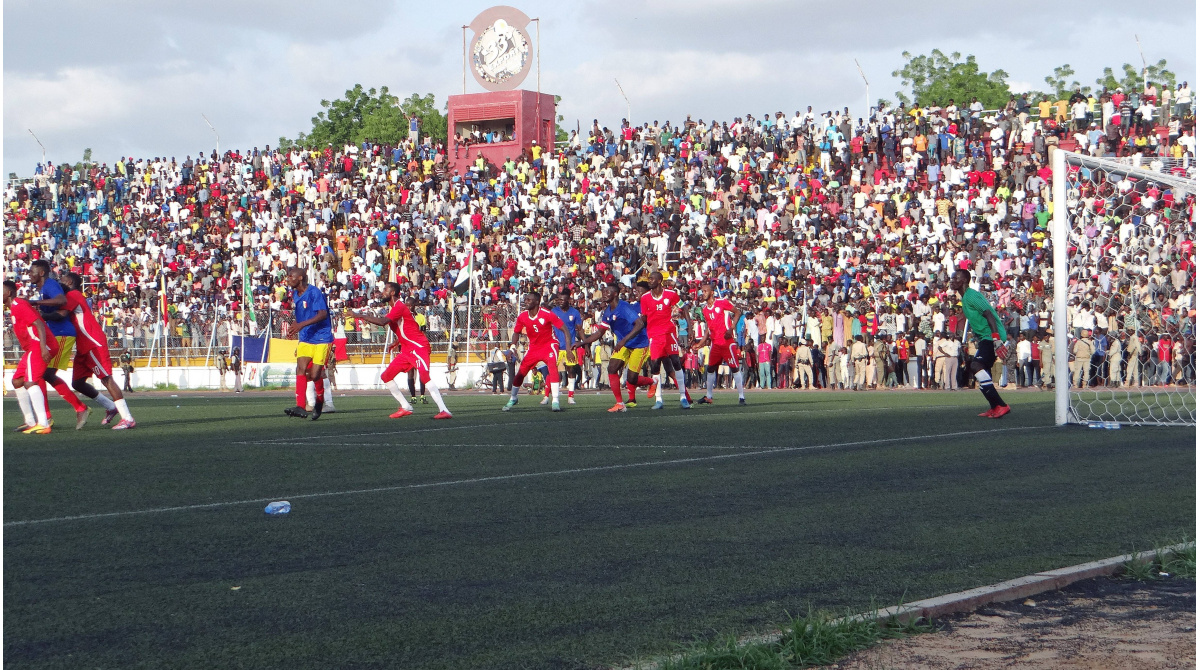
His next stations took him to Sudan, where he first worked as head coach for the multiple national champions Al-Merrikh SC. However, he gave up this job a short time later to become technical director at the Sudanese Football Association. It took him two years to build structures, training concepts and a sustainable strategy.
“Together we offered coaching courses based on the European model, there were even courses for training to become goalkeeping coaches and these were very well received. One course in particular remains in my memory. A lot of trainers came to this event and I gave lectures for several hours. The people were so eager to learn that they wanted me to continue lecturing and stay until the evening,” says the 49-year-old with a smile.
At a glance Match days & groups of the World Cup qualification Africa This way! Ait Abdelmalek’s work is now bearing fruit. In qualifying group B for the 2026 World Cup, the Sudanese national team is currently saluting from the top of the table and is actually leaving nations that are more worthy of consideration such as Senegal and Togo behind them. However, these successes are understandably pushed into the background due to the war in Sudan.
“I just wish that Sudan would finally find peace. The people deserve nothing more than peace,” emphasizes Ait Abdelmalek. “Football can of course distract a little from the current suffering and problems. The national team has great potential, which is due to the fact that the majority of the players play for Al-Merrikh SC and Al-Hilal, which regularly take part in the CAF Champions League. If you look at the results in the qualifications for the World Cup and the Africa Cup of Nations, you can clearly see that there are shifts. Countries that have been behind for years are clearing up the field. I think we will see a few more surprises and I would be very happy if Sudan took part in the next World Cup.”
By Henrik Stadnischenko
